
Your pet's health and well-being are our top priority. That's why MAC's Vetcare is specially formulated with select ingredients to meet your pet's unique needs. A wide variety of complete diet foods have been optimally refined and enriched with vitamins and minerals to address diverse health requirements. Our Vetcare varieties can support dogs and cats suffering from health issues with ingredients specifically tailored to individual needs. With MAC's, your furry friend gets exactly what they need.
Please note that MAC's Vetcare can only provide support and is not a substitute for veterinary treatment. We recommend consulting a veterinarian before use or before extending the feeding period.


Cat Vetcare Renal Diet has been specially developed for cats suffering from chronic or temporary renal insufficiency. By combining high-quality protein sources with a grain-free recipe, this range provides your cat with essential amino acids. The reduced protein content can help decrease both the formation and accumulation of harmful metabolic by-products, thereby easing the workload on the impaired kidneys. An adjusted phosphorus and sodium content offers additional relief for the kidneys.
The different varieties, available in trays and cans, ensure tasty meals even for picky felines.
Recommended for: Chronic or temporary renal insufficiency
Not suitable for: pregnant or lactating cats and kittens
It is recommended to seek the advice of a veterinarian before starting or extending the feeding period. All given information are guidelines.
Vomiting
Loss of appetite or complete refusal to eat
Little to no urination, or conversely, more frequent urination
Dehydration (e.g., dry mucous membranes, skin tenting)
Lethargy, weakness, or withdrawal
Foul-smelling breath (often with an ammonia-like odor)
Signs of abdominal pain (e.g., hunched posture, defensive behavior when touched)
48% beef (consisting of beef, beef lung, beef heart, beef fat, beef broth), 32.5% turkey (consisting of turkey meat, turkey heart, turkey liver, turkey gizzard, turkey meat broth), 16% potato, 1% minerals, 0.7% cranberry*, 0.5% apple pomace*, 0.4% linseed oil (cold pressed), 0.2% dandelion leaves, 0.15% algae. (*dried)
82.6% chicken (consisting of chicken meat, chicken hearts, chicken gizzards, chicken liver, chicken skin, chicken meat broth), 15% potatoes, 1% minerals, 0.7% cranberry*, 0.5% apple pomace*, 0.2% linseed oil (cold pressed), 0.15% algae. (*dried)
Meat (33% beef, 17% chicken) and animal derivatives (beef heart, beef lung, chicken heart), potato (14%), minerals (1%).
Meat (50% chicken) and animal derivatives (chicken: heart, stomach, fat), potato (12%), minerals (1%).
Meat (50% chicken) and animal derivatives (chicken: heart, stomach, fat), potato (12%), salmon (6%), minerals (1%).
Cat Vetcare Urinary series help dissolve struvite stones. The reduced mineral content of this urinary diet can lower the concentration of minerals in the urine. The addition of methionine further helps to acidify the urine, reducing the risk of struvite stone formation. The delicious varieties provide a tasty menu that can support your feline friend’s urinary health.
Available in both trays and cans, the different options not only offer health benefits but also ensure a delicious experience even for the pickiest cats.
Recommended for: adult cats with diagnosed struvite stones
Not suitable for: pregnant or lactating cats and kittens
It is recommended to seek the advice of a veterinarian before starting or extending the feeding period. All given information are guidelines.
Frequent urination in small amounts
Straining to urinate (often painful)
Urinating outside the litter box
Blood in urine
Loud meowing or restlessness during urination
Excessive licking of the genital area
Turbid or strongly smelling urine
In severe cases: complete urinary retention (emergency!)
Lethargy, loss of appetite, vomiting in particularly severe cases
96.6% chicken (consisting of chicken meat, chicken heart, chicken gizzard, chicken liver, chicken fat, chicken meat broth), 2% cranberry, 1% minerals, 0.2% linseed oil (cold pressed), 0.2% chamomile.
56.8% beef (consisting of beef lung, beef heart, beef liver, beef broth), 39.8% turkey (consisting of turkey meat, turkey heart, turkey gizzard, turkey meat broth), 2% apple, 1% minerals, 0.2% linseed oil (cold pressed), 0.2% nettle.
Meat (69% chicken) and animal derivatives (chicken: heart, stomach, liver, fat), minerals (1%).
Meat (min. 39% chicken, 30% turkey) and animal derivatives (chicken: heart, stomach, liver, turkey: heart, stomach, liver) minerals (1%), salmon oil (0,2%).
Meat (min. 35% turkey, 34% beef) and animal derivatives (turkey: heart, stomach, liver, beef: heart, liver, lung), minerals (1%), salmon oil (0,3%).
Weight Control Huhn formula provides a tasty yet low-fat protein source. Thanks to its reduced fat content — and therefore lower caloric density — this food is ideally suited for helping overweight dogs lose weight or maintain a healthy weight .
Meat (63% chicken) and animal derivatives (chicken: heart, stomach, neck), minerals (1%).
Recommended for: Overweight cats or as a preventive measure for less active or senior cats
Not suitable for: Pregnant and nursing cats as well as kittens. Not suitable for cats with liver insufficiency accompanied by impaired bile secretion.
It is recommended to seek the advice of a veterinarian before starting or extending the feeding period. All given information are guidelines.
Sterilized chicken is specially adapted to the needs of neutered felines.
This variety contains low-fat protein sources. Since sterilized cats are more prone to gaining weight, its reduced fat and energy content makes it ideal for supporting weight loss or maintaining a healthy weight.
Meat (68% chicken) and animal derivatives (chicken: heart, stomach, liver), cranberrys (2%), minerals (1%), salmon oil (0,2%).
Recommended for: Weight reduction and weight maintenance in sterilized cats
Not suitable for: Pregnant and nursing cats, as well as kittens
It is recommended to seek the advice of a veterinarian before starting or extending the feeding period. All given information are guidelines.
Mono protein turkey consists of only one type of meat as its protein source . Mono is ideal for sensitive cats. This grain-free complete food has been developed to enhance your pet's well-being. Gentle preparation and the addition of vitamins and minerals guarantee a natural diet.
Meat (min. 70% turkey) and animal derivatives (turkey heart, turkey gizzard, turkey liver), carrots (2%), minerals (1%), safflower oil (0,2%).
Cat's weight - Amount per day
The information provided serves as a guideline. Your pet’s actual nutritional needs may vary depending on age, sex, breed, or activity level.
2-3kg - 108-173g
4kg - 131-204g
5kg - 152-219g
6kg - 172-248G
7KG - 190-275G
8-9kg - 208-300G
In cases of chronic or acute kidney insufficiency, the kidneys lose their ability to filter waste products from the blood and regulate the body’s water balance.
Dog Vetcare renal diets are low in protein and phosphorus, as excessive protein can further strain the kidneys. A controlled phosphorus content is important because diseased kidneys lose the ability to excrete phosphate.
Additionally, omega-3 from salmon oil and the microalge can help reduce inflammation. Lower sodium levels may prevent fluid retention, and antioxidants can help combat free radicals and protect cells.
Recommended for: Chronic or temporary renal insufficiency
Not suitable for: Pregnant and nursing dogs, as well as puppies
It is recommended to seek the advice of a veterinarian before starting or extending the feeding period. All given information are guidelines.
Vomiting
Diarrhea
Loss of appetite
Reduced urination or inability to urinate
Dehydration
Lethargy or weakness
Bad breath
Signs of abdominal pain
47.5% chicken (consisting of chicken meat, chicken heart, chicken fat, chicken gizzard, chicken meat broth), 27.2% beef (consisting of beef, beef liver, beef lung, beef heart, beef broth), 20% potato, 3% rice, 1% minerals, 0.7% cranberry*, 0.5% apple pomace*, 0.2% linseed oil (cold-pressed), 0.2% nettle leaves, 0.15% algae, 0.1% salmon oil (refined). (*dried)
75.1% chicken (consisting of chicken meat, chicken heart, chicken fat, chicken liver, chicken gizzard, chicken meat broth), 15% potato, 5% carrot, 3% rice, 1% minerals, 0.7% cranberry*, 0.5% apple pomace*, 0.2% dandelion leaves, 0.15% algae. (*dried)
Purines are components of proteins that are broken down into uric acid during metabolism. If a dog’s body is unable to properly process or excrete excess purines, high purine levels can accumulate in the blood. This may lead to various health issues, including the formation of urinary stones, gout, arthritis, as well as heart or metabolic problems.
Dog Vetcare Low Purine can support digestion and muscle development while keeping purine levels low. The lean, fresh chicken and black soldier fly larvae provide low purine and protein content. Additionally, excessive fillers and additives are avoided to maintain low purine levels and ensure a high-quality diet.
Recommended for: Dogs with elevated purine levels, or when a liver- and kidney-friendly diet with reduced phosphorus and protein content is required
Not suitable for: Pregnant and nursing dogs, as well as puppies
It is recommended to seek the advice of a veterinarian before starting or extending the feeding period. All given information are guidelines.
Genetic predisposition: Some dogs may be genetically prone to accumulating higher purine levels.
Malnutrition: Diets high in purine-rich foods, such as organ meats, certain types of meat, and legumes, can lead to elevated purine levels.
Diseases: Certain conditions, such as kidney insufficiency, liver disease, or diabetes, can affect purine metabolism and result in increased purine levels.
Medications: Some medications can affect purine metabolism and lead to an increase in purine levels.
53.2% chicken (consisting of fresh chicken meat, chicken broth), 10% insects (consisting of insect larvae (Black Soldier Fly)), 10% sweet potatoes, 10% pumpkin, 10% potatoes, 5% rice flour, 0.7% whole egg powder, 0.5% minerals, 0.4% sunflower oil (refined), 0.2% nettle
Similar to humans, dogs can become overweight for a variety of reasons. Excess weight can have serious consequences for your dog’s health and quality of life.
Dog Vetcare Weight Control can help support your dog’s weight reduction. The included cellulose aids digestion and promotes a long-lasting feeling of satiety.
This low-calorie formula maintains nutrient quality while enabling controlled calorie intake through detailed feeding recommendations. Fresh chicken and whole egg powder provide high-quality protein to help maintain muscle mass, while specific vitamins and minerals support overall health. A moderate fat content ensures your dog’s energy needs are still met.
Recommended for: adult and overweight dogs
Not suitable for: Pregnant and nursing dogs, as well as puppies
It is recommended to seek the advice of a veterinarian before starting or extending the feeding period. All given information are guidelines.
The effects of obesity on a dog can have consequences and significantly impair its quality of life. These include:
78.2% chicken (consisting of fresh chicken meat, chicken hearts, chicken stomachs, chicken liver, chicken broth), 8% pumpkin, 7% carrot, 4% rice flour, 1.5% cellulose, 0.8% minerals, 0.5% whole egg powder
Acute gastrointestinal problems can have a wide variety of causes: from food intolerances to infections, many things can lead to diarrhea and stomach pain.
's carrot soup is one of the most effective and oldest home remedies for acute diarrhea and was developed by Professor Ernst Moro. It consists simply of carrots, water, and salt and is cooked for a very long time. Moreover, it has no side effects and usually provides quick and reliable relief.
Our improved version with psyllium husks can enhance the anti-diarrheal effect. Psyllium husks are rich in soluble fiber and can therefore help regulate digestion and promote intestinal health. They can also help regulate bowel movements and relieve both diarrhea and constipation, as the husks absorb liquid and their gel-like consistency thickens the stool.
Recommended for: Dogs of all ages
Not suitable for: dogs with a suspected or an existing carrot allergy
It is recommended to seek the advice of a veterinarian before starting or extending the feeding period. All given information are guidelines.
Food intolerances or allergies: If a dog consumes something that triggers intolerances or allergies, gastrointestinal upset or diarrhea may occur.
Diet Changes: Sudden changes in food can irritate a dog’s digestive system, leading to diarrhea or other gastrointestinal issues. Gradual transitions between foods are therefore important.
Bacterial or viral infections: Infections such as parvovirus, canine coronavirus, or salmonella can also cause diarrhea in dogs.
Parasitic infestations: Worms such as roundworms, hookworms, or Giardia can be responsible for diarrhea.
Stress: Stress or anxiety can affect the digestive system and lead to diarrhea. This may be triggered by changes in the environment, separation anxiety, or other stress factors.
Medications: Some medications can cause gastrointestinal upset and diarrhea as side effects.
Toxic substances: Ingesting toxic substances like chocolate, certain plants, or cleaning products can result in diarrhea.
50.3% carrot, 49% water, 0.4% psyllium, 0.3% sea salt.

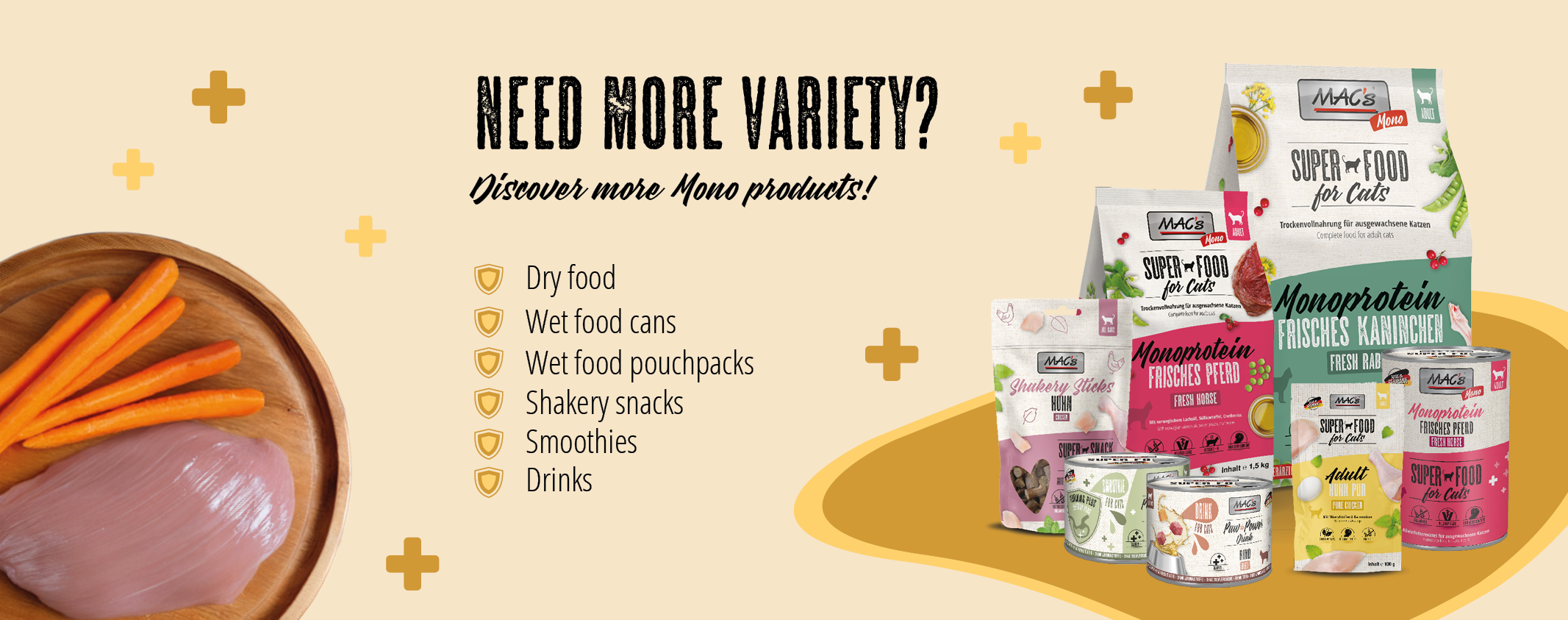
Our Mono range for dogs and cats offers a versatile selection of grain-free dry and wet food made from just one animal protein source, complemented by added vitamins, herbs, and healthy fats. This makes our products especially suitable for sensitive pets.
Are you unsure whether your four-legged friend has an intolerance? On our blog , we explain the difference and what you need to pay attention to if you want to find out what your pet is sensitive to.